


Want to know how to get better at rugby? Whether you’re brand new to the sport or chasing that next level of performance, there are plenty of ways to become faster, fitter, stronger and more confident on the pitch.
The best part? You don’t have to transform your game overnight. A bit of consistent training, sharper technique and plenty of time playing the game can go a long way. Keep putting in the work and those small improvements will soon start adding up.
And what better way to put your skills to the test than by taking on new teams and playing in a proper rugby festival? Our 2027 UK rugby festival weekends are a great opportunity to put your skills to the test!
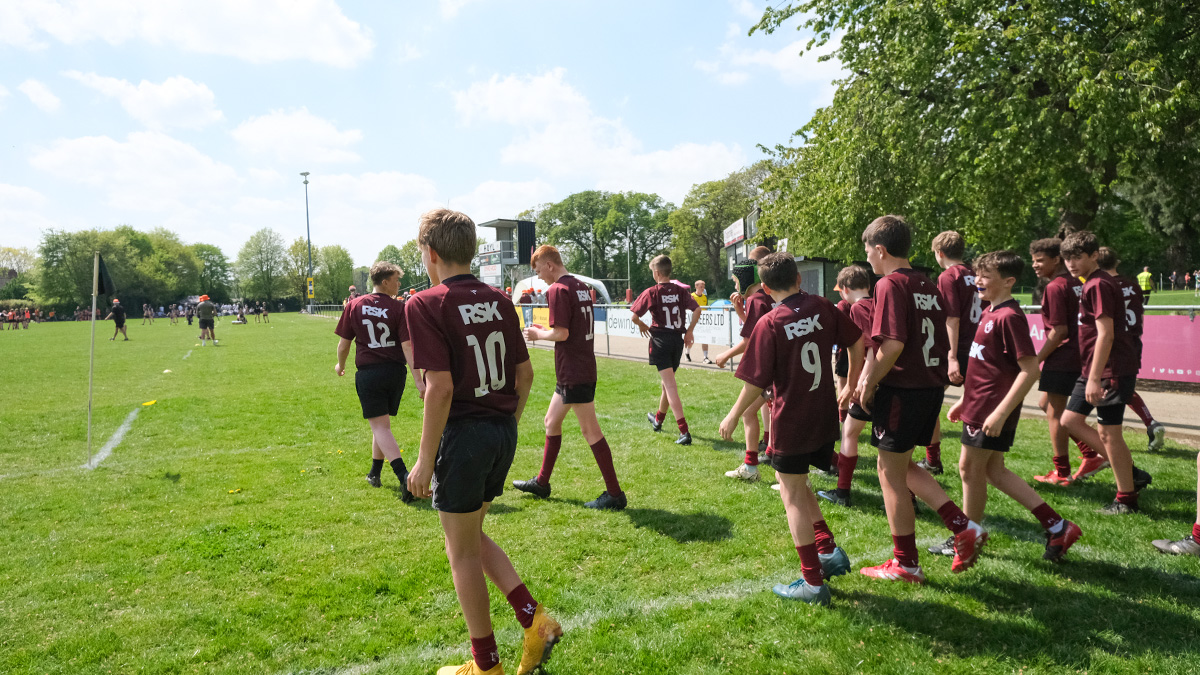
1. Improve Your Rugby Fitness
If you’re wondering, “How can I improve my rugby fitness?”, the best place to start is by training for what happens during a game.
Rugby isn’t just about running from one end of the pitch to the other. You’re constantly switching gears by sprinting, tackling, passing, changing direction and getting back into position. Your fitness training should keep up with the action.
Try mixing these into your training routine:
- Short interval runs
- Shuttle runs
- Hill sprints
- Bodyweight exercises
- Agility drills
- Rugby-specific conditioning
A consistent routine, with a good mix of harder sessions and recovery, can steadily build your fitness and help you keep your energy levels up from kick-off to the final whistle.
2. Improve Your Rugby Speed
Speed can be a real gamechanger in rugby. So, how can you improve your rugby speed?
Focus on short, explosive efforts that reflect the demands of a match. Work on accelerating from a standing start, changing direction quickly and maintaining good running technique as you build up speed.
If you’re looking to improve your sprint speed specifically, try short sprints of around 10–30 metres, with plenty of recovery between efforts. Focus on powerful acceleration, controlled movement and good technique rather than trying to sprint until you’re completely exhausted.
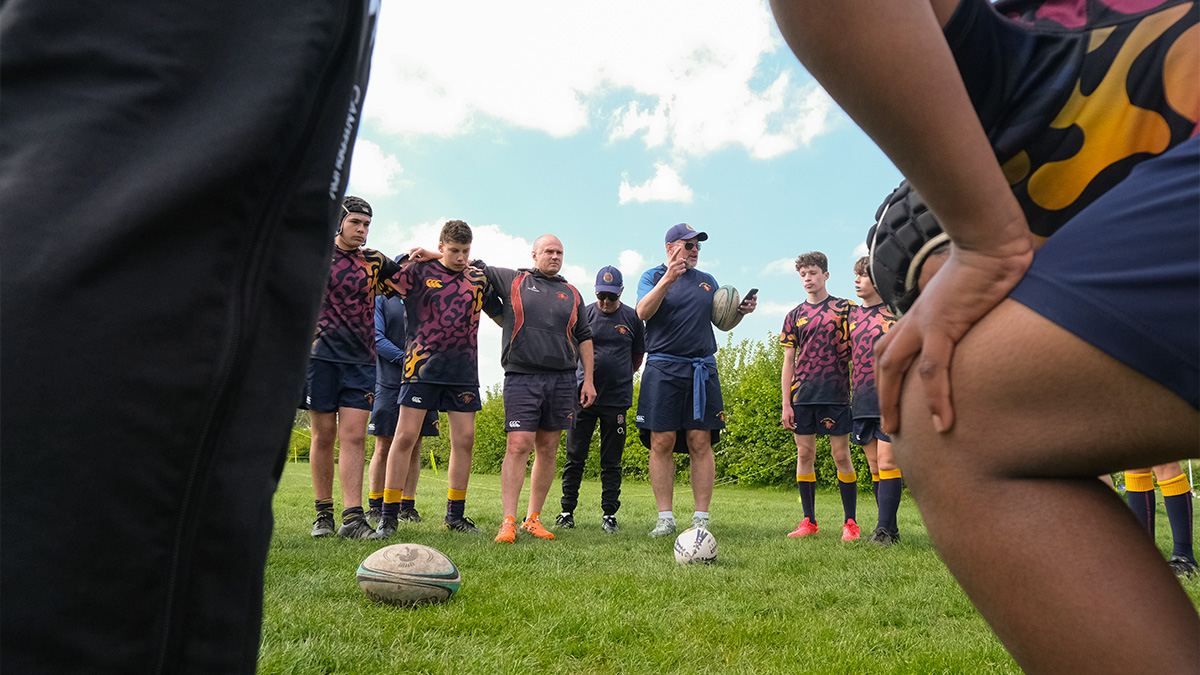
3. Practice Your Rugby Skills
If you’re wondering how to improve your rugby skills, sometimes the best place to start is by going back to basics.
Passing, catching, kicking, positioning and communication are the building blocks of a good rugby player. The more time you spend practicing them, the more natural they’ll feel when you’re in the middle of a fast-paced game.
Try working on:
- Passing accurately from both hands
- Catching while on the move
- Passing under pressure
- Communicating clearly with teammates
The more comfortable you are with the basics, the quicker you can make good decisions when the pressure is on, and the game starts moving at full speed.
4. Work on Your Agility
Rugby is rarely about running in a straight line for very long. One minute you’re sprinting forward, the next you’re reacting to an opponent, changing direction or darting into space.
That’s where agility comes in. Drills such as shuttle runs, cone exercises and reaction drills can help you become quicker and more confident when changing direction at speed.
Try mixing up your training with:
- Shuttle runs
- Cone and change-of-direction drills
- Reaction exercises
- Short acceleration drills
- Ball-handling while moving
You can make things even more rugby-specific by adding a ball to some of your drills. That way, you’re not just working on your footwork – you’re practicing the skills you’ll need when the pressure is on and there’s a ball in your hands.

5. Play More Rugby
One of the simplest answers to “How do I get better at rugby?” is to get out there and play.
Training is great for developing individual skills and improving your technique, but matches are where you really learn how to put those skills into practice.
Playing against different teams can also expose you to new styles, tactics and levels of competition. Along the way, you’ll have plenty of opportunities to improve your communication, decision-making and confidence.
That’s one of the best things about rugby festivals. You get to play against new teams in a different environment. It’s competitive, challenging and, most importantly, a lot of fun!
6. Learn From Every Match
Taking a few minutes to think about your performance after a game can help you spot what’s working and where you can improve.
Maybe your passing was on point, but your positioning could have been sharper. Perhaps you made some great tackles but could have communicated more with your teammates. Every match gives you something to take away.
And don’t underestimate the power of small improvements. Over time, those little changes can make a big difference to your overall game.
Ask your coach for feedback, listen to your teammates and don’t be afraid to learn from mistakes.
7. Set Yourself a Rugby Goal
Having a goal to work towards can make training feel much more rewarding.
Think about what you’d like to improve this season. Maybe you want to get quicker, feel more confident with your tackling, sharpen up your passing or build your fitness and consistency. Whatever you choose, having something specific to aim for can help keep you motivated.
Then it’s time to put all that hard work into action.
Ready for Your Next Rugby Challenge?
If you’re looking for a chance to put your training to the test, why not make 2027 your year for a Sports Tours Rugby Festival Weekend?